
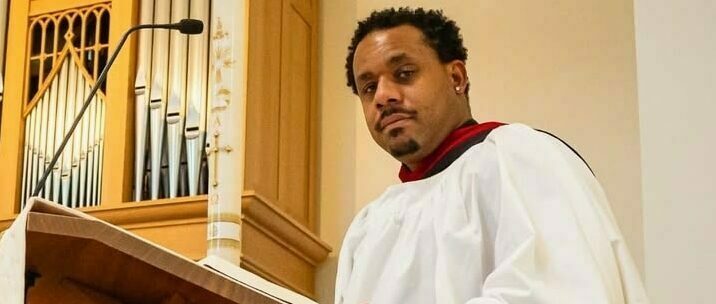
 CACS has long hoped to establish a regular Cross-Cultural Education Program with Ghana, especially with the area of the coastal Slave Forts. David Smith used his spring break to travel to Ghana with support from Seminary Consultation on Mission (SCOM) and the Reverend Akua Ofori-Boateng, Diocese of Accra, who was a VTS Communion Sabbatical visitor in 2022 and a participant in the Women Mentoring Women Conference in February 2025. We are honored to present some of David Smith’s reflections from his time in Ghana below:
During the spring semester 2025, I was blessed with the opportunity to spend two weeks in Ghana. I spent the majority of this time in the capitol city of Accra, but I also spent time in both Cape Coast and Elmina. I had five goals for this trip:
- To visit the “Slave Castles” on Ghana’s coast;
- To interview Anglican leaders in Ghana;
- To create music to serve as a theological reflection of the trip, incorporating Ghanian musical sounds and artists;
- To immerse myself in different worship spaces and attend a worship service;
- To explore the culture of Ghana: to spend time with Ghanian people, go where they go, and live as they do.
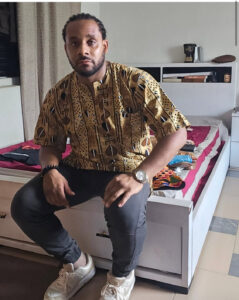
While in Ghana, I stayed with a friend named Mascot. He lives with a friend in the Barracks of Roman Ridge, Accra. He and his friend work as prison officers. While staying there, I was fully immersed in authentic Ghanian customs and ways of living. Mascot and his friend, Nana Kofi, truly looked out for me during the entire trip, and I am extremely grateful for their presence.
I learned something profound in pursuit of each goal. Visiting the slave castles in Cape Coast and Elmina was extremely powerful and would have been worth the trip on its own. I was able to see the slave trade in a completely different way. I’m often told the story of what happened in America, but hearing and seeing the story from an African point of view was very insightful and moving. The most surprising (and disturbing) thing that I learned was just how common and easy it was for the leaders within the castles to impregnate the captured female Africans.
Thanks to Rev. Akua Ofori-Boateng, the director of programs for the Anglican Diocese of Accra, I was able to meet some amazing people within the diocese and conduct interviews with them. My goal was to learn about their story; what drew them to Anglicanism, to learn about the relationship between the Ghanian people and the Anglican church, and to gain insight on how the Anglican church in Ghana operates. I visited with leaders within the diocese, Deans of Cathedrals and Seminaries, along with lay members of the church. It was interesting to learn that most people I interviewed grew up in the Anglican tradition, and that in general, the Anglican church in Ghana is not focused on conversion. From what I was told, I got the sense that their main goal was to increase their resources to better serve the individuals and communities they’re currently serving.
While in Ghana, I was able to record four songs. This music reflects different aspects of my time in Ghana. Each song features someone from Ghana. Mascot and Nana Kofi each are featured on a song, and the two remaining songs feature Outlaw Zamani, an up-and-coming dancehall artist and a close friend of Mascot. I learned that Ghanian music is heavily influential and connected with reggae, and that Ghanaian “High Life” music is extremally popular.
Additionally, I was able to visit Christ Church Cathedral in Cape Coast, St. Nicholas Seminary and its Chapel, and I worshiped in The Cathedral Church of the Most Holy Trinity in Accra. Though the service was over three hours long (thanks to their announcements section doubling as a time for donations), it still had all the elements one would expect from an Anglican church. I loved how they incorporated tradition Anglican liturgy, chants, and hymns, with contemporary and culturally relevant worship music. It made it so I could follow along with the entire service but also be immersed within authentic Ghanaian culture.
Lastly, while in Ghana, I made an effort to truly explore and immerse myself within the culture of Ghana. As well as with living with Mascot and Nana Kofi, we traveled to markets, beaches, and walked around numerous neighborhoods in Accra. I ate traditional Ghanian meals, which I learned were always extremely spicy!! By the end of the trip, rice and chicken was basically all my stomach could handle, but nevertheless, I had a great experience.
This trip to Ghana was such a special way to spend a portion of my final semester at VTS. I would love to continue to work with Dr. Grieb to make a Ghana trip a more regular thing for VTS students. This would certainly partner well with the Reparations program that’s already thriving at VTS. As an African American Student, I can describe this trip as a profound pilgrimage back to a land my direct ancestors may have called home. In fact, “welcome home” was the sentiment from just about everyone I encountered, especially in Cape Coast and Elmina. I am truly thankful for the opportunity to travel to Ghana, and I hope that others get the chance to travel as well.